
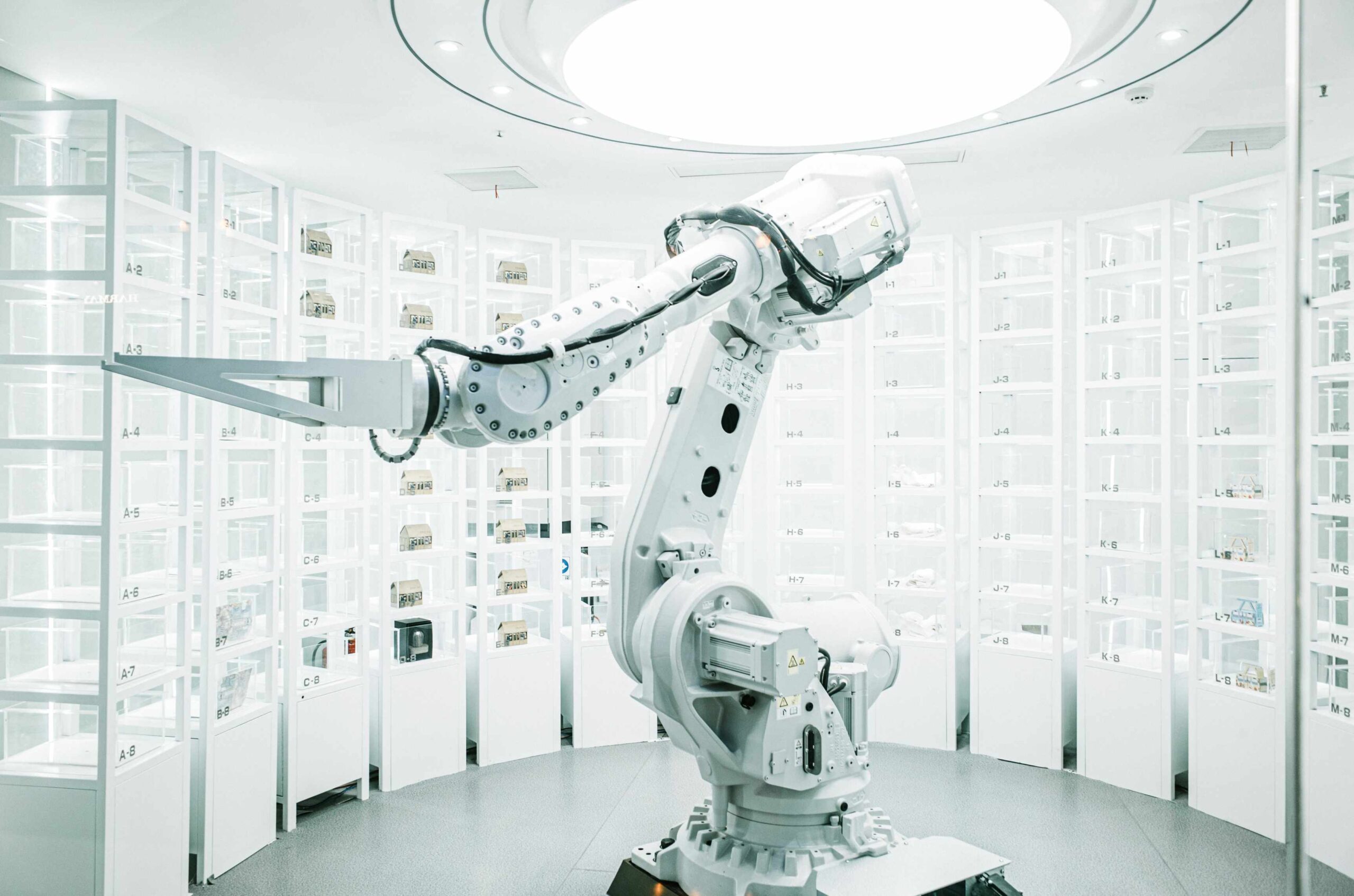
The first warehouse robot I found impressive looked nothing like a robot from a movie.
It was a low platform moving shelves.
No face. No arms. No conversation.
It rolled under a storage rack, lifted it slightly and carried the entire rack toward a worker.
That was it.
The machine was useful because it did not try to imitate a person. It changed the process around the strengths of machines.
This is the part of robotics that gets less attention than humanoid demos. Many successful robots are oddly shaped, highly specialised and designed for one repetitive environment.
They are not trying to become coworkers with personalities.
They are trying to move a box without getting tired.
Warehouses are built for repetition
Warehouses contain a lot of movement.
Workers walk to shelves, pick products, move carts, sort packages and repeat the same routes hundreds of times.
Walking is expensive when the building is enormous.
A robot that brings shelves or bins to a worker reduces travel time. Other robots carry items between stations. Conveyor systems and automated sorters move packages according to destination.
None of this removes human work entirely.
It changes which part humans perform.
People handle exceptions, damaged items, unusual shapes and decisions that machines struggle with.
The robot handles distance.
That division can be effective.
The environment is controlled, which helps enormously
Robots in public streets deal with unpredictable humans, weather, animals, construction and traffic rules.
Warehouses are friendlier.
The floor is mapped. Routes can be controlled. Lighting is consistent. Staff can be trained around the machines. Barcodes and inventory systems provide structured information.
This is why industrial automation often advances faster in controlled environments.
The robot does not need general intelligence.
It needs reliable navigation inside one building.
People sometimes underestimate how much useful automation becomes possible once the world is made slightly less chaotic.
Factories learned this decades ago.
Warehouses are learning it at larger scale.
Picking objects is harder than moving them
Humans are remarkably good at grabbing random things.
A soft bag of clothing. A shiny bottle. A box crushed slightly at one corner.
Robotic arms find this difficult because object shapes, textures and positions vary. Vision systems need to identify the item, estimate how to grasp it and recover when the grip fails.
Progress has been rapid, especially with better cameras and machine learning.
Still, picking a carefully arranged object in a demo is different from handling thousands of products dumped into bins during a busy shift.
Robotics lives in the gap between 95 percent accuracy and the remaining five percent that falls on the floor.
Warehouses care about the five percent.
Humans become exception handlers
Automation has a pattern.
Machines take the predictable middle.
People inherit the weird edges.
A damaged barcode. Two products stuck together. A package that is heavier than expected. An order flagged by the system for reasons nobody can reproduce.
This can make work less physically demanding.
It can also make human jobs mentally fragmented. If a worker deals only with exceptions, every task they see is unusual by definition.
System designers need to think about that.
Optimising machine efficiency without considering the human workflow can create jobs where people spend eight hours cleaning up algorithmic confusion.
Automation should improve the whole process.
Not merely the robot’s utilisation graph.
Safety changes the layout
Traditional industrial robots often operate behind barriers because fast machinery and people are a dangerous combination.
Modern warehouse robots increasingly share spaces with workers.
That requires sensors, speed limits, emergency stops and careful traffic management. Robots need to detect people and avoid collisions. Workers need to understand how the machines move.
A safe robot may behave more cautiously than the fastest technically possible robot.
Good.
Warehouses already contain forklifts, shelving and heavy packages. Adding autonomous machines should reduce injury risk, not create a new category.
Safety performance belongs beside throughput in the success metrics.
If only one is measured, guess which one gets optimised.
Fleet software is the hidden product
One robot is a machine.
Five hundred robots are a traffic system.
Software decides which robot handles which task, where charging happens, how congestion is avoided and what to do when one unit fails.
This orchestration becomes the real intelligence of large deployments.
A robot may take a perfectly reasonable route individually and still create a traffic jam when every other robot makes the same decision.
Coordination matters.
The same lesson appears in cloud computing, delivery fleets and public transport.
Local optimisation can create global stupidity.
The fleet manager needs the whole picture.
Jobs change unevenly
Robotics discussions often collapse into “robots take jobs” versus “robots create jobs.”
Reality is less symmetrical.
Some tasks disappear. Some roles shrink. New maintenance, supervision and systems jobs appear. The new jobs may require different skills and may not be located in the same place or offered to the same people.
A worker whose walking-intensive picking job is automated does not automatically become a robotics technician.
Companies have choices here.
They can invest in training, redesign jobs and give experienced warehouse staff routes into technical roles. Or they can treat workforce transition as someone else’s problem.
Technology determines what is possible.
Management determines a lot of what happens to people.
Small warehouses may not need fancy robots
Robotics gets cheaper over time, but automation still needs volume.
A small warehouse shipping fifty orders a day may not benefit from a sophisticated robot fleet. Better shelving, barcode scanning and simple software could produce a larger return.
This is a recurring technology lesson.
Do not automate an inefficient process before understanding why it is inefficient.
Sometimes the expensive robot is solving bad layout.
Move the shelves first.
Measure travel, error rates and workload. Then decide which repetitive physical tasks justify automation.
Robots are tools.
They should have a boring business case.
Humanoids will have their place
Humanoid robots are attracting attention because existing buildings were designed for human bodies.
Stairs, doors, tools and shelves all assume roughly human dimensions. A general-purpose robot with arms and legs could theoretically work in environments without redesigning everything.
That is compelling.
It is also technically difficult.
Warehouses can often achieve better performance sooner by changing the environment around simpler machines.
Why build a perfect robotic person to push a cart if an autonomous cart can move itself?
The answer may eventually be flexibility.
For now, specialised robots often win through economics.
Less cinematic.
More useful.
The quiet robot is already here
Warehouse robotics does not need to wait for machines that speak naturally or resemble humans.
Automation is already happening through mobile platforms, arms, sorters, vision systems and software coordinating them.
The technology will keep improving.
I suspect the most successful systems will remain visually unimpressive.
A rack moves to the right station. A package gets sorted correctly. A worker walks five kilometres less during a shift.
Nobody applauds.
The order arrives tomorrow.
That is enough.