
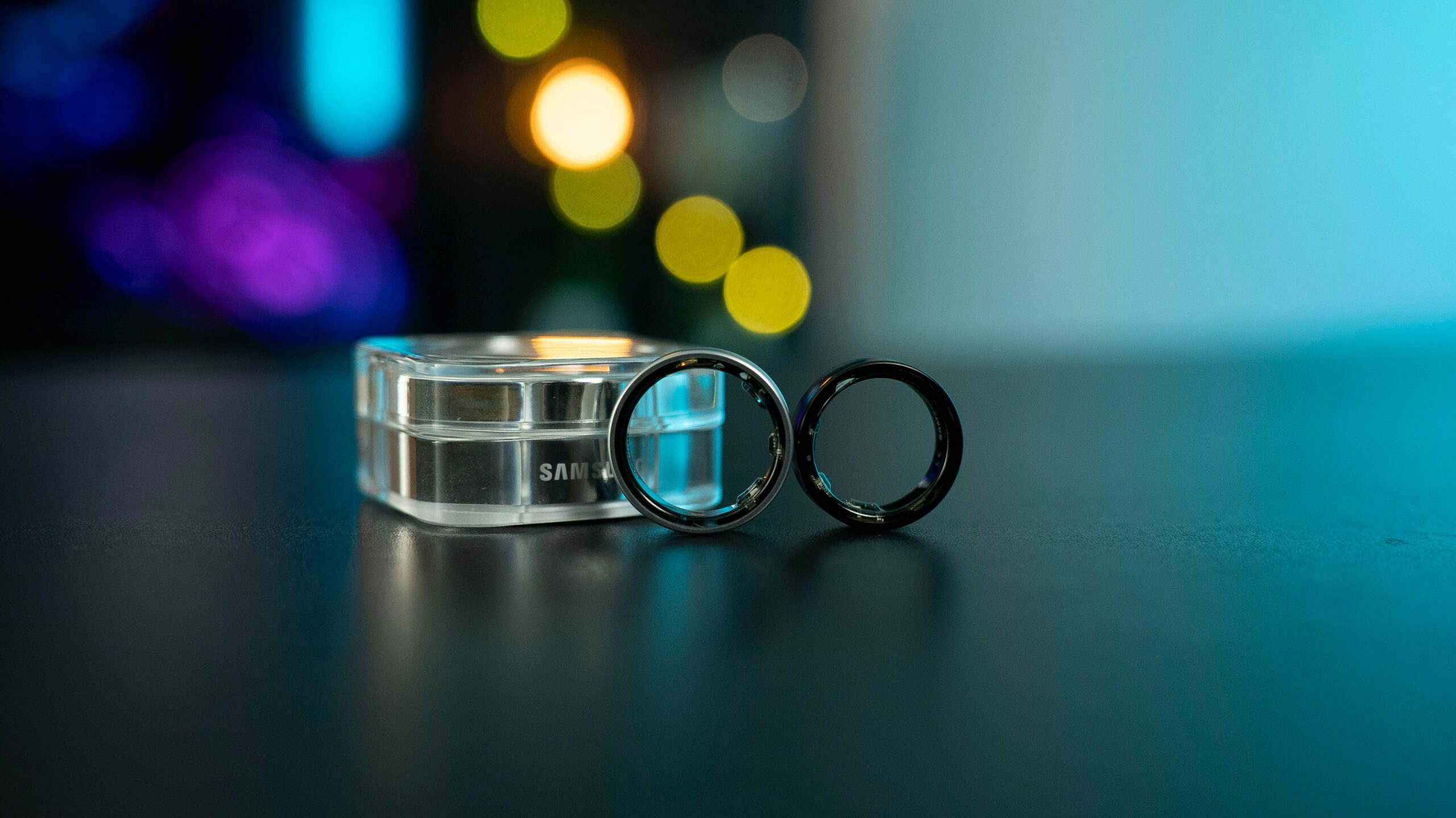
I stopped wearing a smartwatch to bed because it annoyed me.
Not in a dramatic way. It was simply another screen on my wrist, glowing occasionally, bumping against the pillow and reminding me that even sleep had become something I was apparently supposed to optimise.
A friend suggested a smart ring.
My first reaction was that this sounded like a product invented during a meeting where someone said, “What if the fitness tracker were smaller and more expensive?”
Then I tried one.
The interesting part was not that it tracked more. It tracked less visibly.
That turns out to matter.
Wearable technology has a screen problem
Smartwatches are excellent little computers.
They show messages, directions, calls, timers, workouts, weather and notifications from apps that probably did not need wrist access in the first place.
That usefulness creates distraction.
A health tracker ideally disappears until the moment you want information. A smartwatch often does the opposite. It invites interaction.
Smart rings have no meaningful display. Most cannot show a Slack message or tempt you to check email because your wrist vibrated.
For people who mainly want sleep, recovery and activity data, that limitation can feel like a feature.
The device collects quietly.
You look later.
Sleep is where the ring makes the strongest case
A watch is not large, but people notice objects differently during sleep.
Some sleepers do not care. Others remove the watch without thinking.
A ring can be easier to forget.
That makes overnight tracking more consistent, which is useful because sleep and resting patterns depend on regular data rather than one heroic night of measurement.
The sensors are close to the skin and can measure signals such as heart rate, temperature trends and movement. The companion app then turns those measurements into summaries.
I would treat those summaries as useful signals, not medical truth.
Consumer wearables are good at showing patterns.
They are less good at explaining every reason behind them.
A poor score after a late dinner does not mean the ring discovered a new law of biology.
The battery advantage is underrated
Screens consume power.
Remove the screen and a wearable can often run longer between charges.
That matters because a health tracker missing two nights every week while charging is not especially useful.
Longer battery life also changes the relationship with the device. You stop thinking about it as frequently.
Good wearable design should reduce maintenance.
A ring that needs attention every few days is easier to live with than a device demanding a charging ritual every evening.
Of course, batteries still age. Tiny sealed batteries are not famous for easy replacement.
The repairability conversation eventually reaches everything.
Rings fit differently from watches
This sounds obvious until people order one online.
Finger size changes during the day. Heat, exercise, travel and salt intake can all affect fit. A ring that feels perfect in the morning may become tight after a long walk in summer.
Manufacturers often provide sizing kits for this reason.
Use them.
Do not assume your jewellery size maps perfectly to a smart ring. Sensors need reasonable skin contact, and a poor fit can affect comfort or data quality.
Also, fingers are busy.
Weights at the gym, tools, luggage handles and household work can scratch or press against a ring more than a watch.
A wearable designed to disappear still occupies physical space.
The data can become emotionally noisy
Wearable health scores are presented neatly.
That neatness can create false certainty.
A sleep score of 82 feels objectively better than 76. A recovery indicator changes colour. The app suggests taking it easy.
Sometimes the advice matches how you feel.
Sometimes you wake up feeling excellent and the app disagrees.
I prefer trends over daily judgement.
If resting heart rate changes consistently for several days, that may be interesting. If one night looks unusual after travel, I do not reorganise my life around it.
People can become anxious when normal variation receives a numerical grade every morning.
Data should support body awareness, not replace it.
Smartwatches still do much more
A ring is not a smaller smartwatch.
If you want navigation, calls, music controls, workout screens or quick replies, the watch wins easily.
Athletes who need live pace or heart-rate zones during exercise will probably prefer a visible display. A ring can collect data, but looking at your finger will not tell you whether the final kilometre is too fast.
This is why I do not see the categories as direct replacements.
They overlap in health tracking, then diverge.
The watch is an interface.
The ring is closer to a sensor.
Some people will wear both, which feels excessive until you remember how many screens are already in the average home.
Privacy deserves more attention than step counts
Wearables collect intimate data.
Sleep times. Heart rate. Activity patterns. Possibly temperature changes and other health-related signals.
That information deserves more care than ordinary app analytics.
Before choosing a wearable, look at how data is stored, whether it can be deleted, what happens if you close the account and whether information is shared for advertising or other purposes.
Also think about integrations.
Connecting the ring to several health and fitness platforms increases convenience. It also increases the number of services holding some version of your data.
Sync is useful.
Permanent multiplication is less exciting.
Fashion matters because you wear it constantly
Tech reviews sometimes treat appearance as superficial.
For wearables, appearance affects whether the product gets used.
A ring sits on your hand during meetings, dinners, travel and photos. If it looks too bulky or feels awkward with other jewellery, people may stop wearing it.
That makes design part of function.
The same is true for smartwatches, hearing devices and glasses. Technology becomes personal when it lives on the body.
A technically excellent wearable left in a drawer has zero accuracy.
Comfort wins.
I like technology that asks for less attention
The smart ring is not a revolution.
It is a different compromise.
Less screen. Less interaction. Often longer battery life. Good passive health tracking. Fewer obvious smart features.
That combination suits people who want data without adding another notification surface.
I still use a smartwatch for certain workouts.
I prefer the ring for ordinary days and sleep.
The best thing it does is almost nothing while I am wearing it.
For a wearable, that is surprisingly persuasive.