
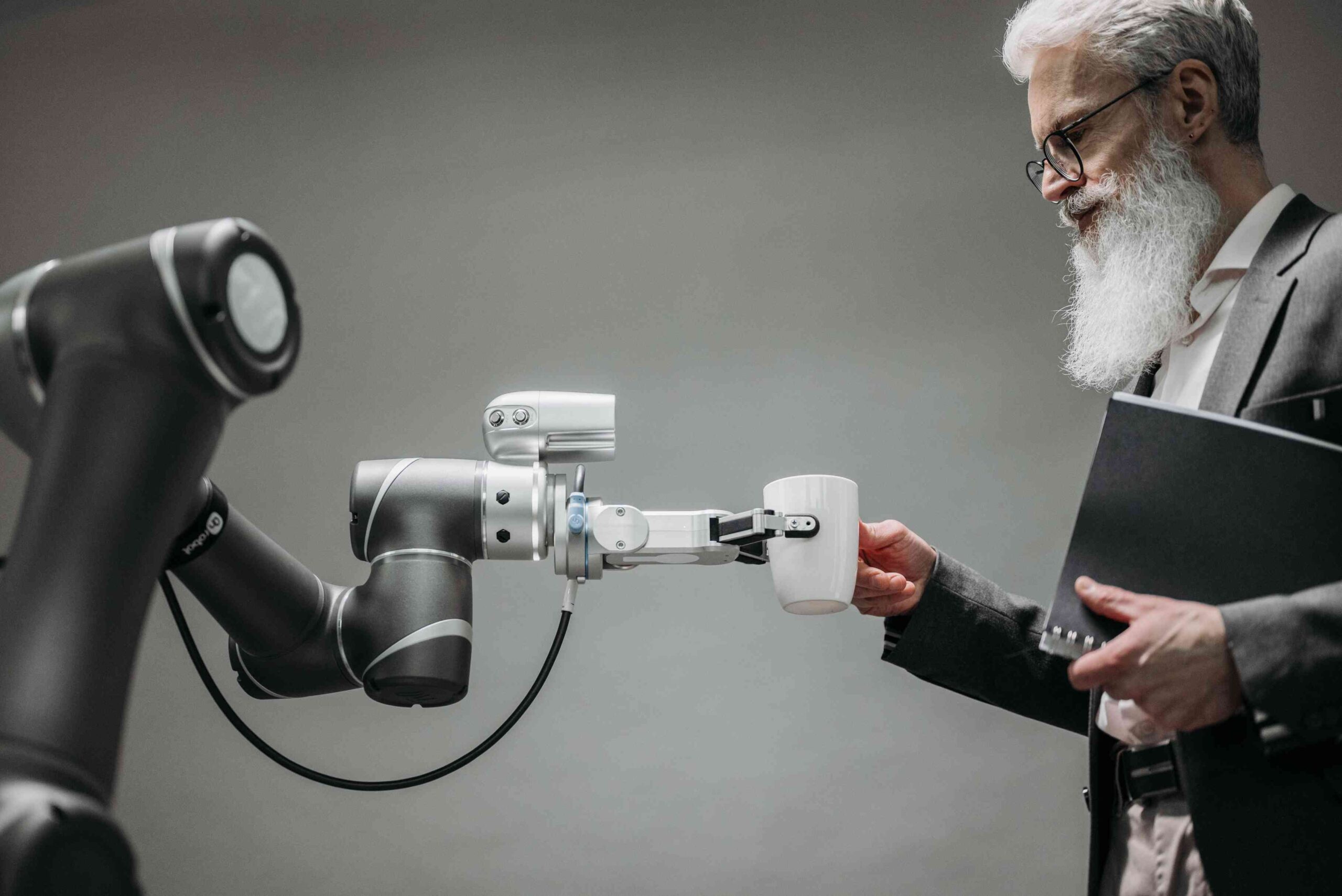
A normal chatbot is easy to understand.
You ask for a summary. It writes one. You ask for a better subject line. It gives you six, including at least one that sounds strangely excited.
Then it waits.
An AI agent is different because it tries to continue toward a goal. Ask it to prepare a weekly customer report and it may collect data, inspect support messages, identify recurring complaints, create a draft and place it in the right folder.
That sounds a little like an employee.
It is not.
The distinction matters because people are giving these systems both too much credit and too much access.
The agent works in a loop
Most agents follow a rough pattern.
They receive a goal. They decide on a next step. They use a tool or gather information. They examine the result and choose what to do after that. The loop continues until the task is complete, the system gets stuck or a human is required.
This is not consciousness. It is organised software behaviour built around a capable model.
The model interprets language; other parts provide tools, memory, rules and limits.
When an agent seems to browse the web, something has given it a browsing tool. When it updates a calendar, it has been granted calendar access.
The agent cannot reach beyond the doors somebody opened.
Unless those doors were opened carelessly, which is where the story becomes less cheerful.
The boring examples are the useful ones
People demonstrate agents by asking them to plan elaborate holidays or launch online businesses.
Real value often lives in duller work.
A support agent can identify a customer, retrieve policy and draft a response. A sales agent prepares call notes. A finance agent flags incomplete invoices.
These jobs contain several steps but have a recognisable shape.
They consume time without needing human judgment at every moment. The agent moves information; a person handles judgment, relationships and unusual exceptions.
If your agent needs a philosophical debate before every action, the workflow may not be ready for automation.
It is not a digital employee
Calling agents “digital workers” is good marketing and bad mental hygiene.
Employees understand social context. They know which client becomes anxious when a message sounds too formal. They remember that the pricing spreadsheet is wrong in March because of a temporary arrangement. They can ask a colleague whether a request feels unusual.
Agents operate from available information and rules.
They can appear confident because language models produce fluent explanations. Fluency is not workplace experience.
Treating an agent like an employee encourages vague expectations. Treating it like software encourages clear scope, testing and permissions.
Software is the safer category.
Good agents know when to stop
One sign of a mature agent is not that it completes everything independently.
It knows when to ask.
Perhaps two customer records match the same name. Perhaps a refund exceeds a limit. Perhaps the source documents disagree. A reliable agent should pause instead of inventing certainty.
This behaviour must be designed.
AI systems naturally produce likely continuations. They do not feel embarrassment when information is missing. Someone has to define the conditions where the system requests help.
I trust an agent more after seeing it refuse a task for a sensible reason.
People want demos with uninterrupted success. Production systems need well-timed hesitation.
Memory is useful and dangerous
Agents may store information from earlier work.
That can make them more helpful. A project agent remembers the team’s preferred report format. A support agent knows which product version the customer uses. A personal assistant remembers that you avoid early morning meetings.
Memory also raises obvious questions.
What is being stored? Where does it live? Can it be corrected or deleted? Could information from one customer appear during work for another?
Software memory can be copied perfectly and exposed at scale.
Use memory for information that genuinely improves the task. Do not store everything because storage is easy.
A system that remembers every conversation may eventually remember something nobody wanted preserved.
Tool access decides the risk
An agent that can search public documentation has limited power.
An agent that can send emails, modify customer accounts and approve payments has much more.
The model may be identical; the risk is not.
This is why agent design is partly an access-control problem. Give the smallest set of permissions required. Separate reading from writing. Require confirmation before external or irreversible actions. Keep logs.
If an agent drafts a message, a person can review it. If the agent sends immediately, the review becomes a customer complaint.
Speed is not always the useful setting.
Agents can fail politely
The dangerous agent does not necessarily produce an obvious error.
It may complete the wrong task neatly.
A user asks for the “latest contract,” and the agent finds a document with FINAL in the name. It summarises the terms and stores the brief in the correct project folder. Every step worked.
The document was not the latest.
This is why testing must include realistic ambiguity. Try duplicate names, outdated files, missing fields and conflicting instructions. See whether the agent notices.
Ordinary test cases prove the system works when the world cooperates.
The world does not cooperate for long.
Start with an assistant, not a replacement
The safest first agent supports a person.
It gathers information, drafts work and points out what needs attention. The person remains responsible for the decision.
Over time, routine low-risk actions can become automatic. But expansion should follow evidence, not enthusiasm.
A company might begin with drafted support replies, then automate only a small set of proven cases. Complaints and refunds stay with people.
That progression is less impressive than launching a fully autonomous customer service agent.
It is also less likely to apologise publicly on behalf of the company for something nobody approved.
The best agent may feel like a feature
Eventually, people may stop calling these systems agents.
The accounting software will collect missing invoice details. The project tool will prepare a status report. The email client will organise a complicated scheduling exchange.
Users will care that the work happened, not which AI category performed it.
That is how technology usually settles down. The dramatic concept becomes a button, a setting or an automated step inside familiar software.
For now, the word “agent” is useful because it reminds us that the system may do more than answer.
It may act.
Before giving it a task, check which keys are in its pocket.