
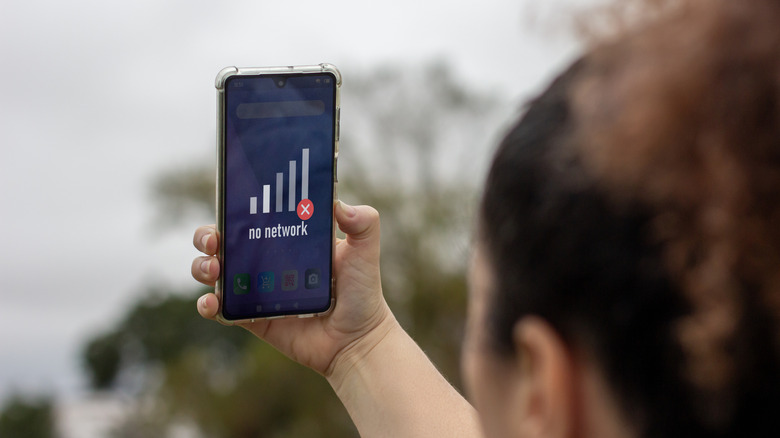
There is a particular kind of silence that arrives when your phone loses signal somewhere you actually need it.
The map stops updating. Messages sit with a tiny clock beside them. You raise the phone toward the car window as though the extra thirty centimetres might negotiate with the mobile network.
For decades, dead zones were simply part of owning a phone. Towers cover an enormous amount of land, but mountains, remote roads and sparse populations make universal coverage difficult and expensive.
Now satellites are beginning to fill some of those gaps directly from ordinary-looking phones.
That sounds more futuristic than it feels in practice. Which is probably why it matters.
The phone is becoming the satellite phone
Traditional satellite phones were specialist devices.
They were expensive, bulky and used by people who had a reason to travel far beyond normal coverage. Most of us would never own one.
The new direction is different. Phone makers and mobile operators are adding satellite connectivity to mainstream devices, sometimes using the same handset people already carry. Apple has expanded satellite features across recent iPhones, while mobile operators and satellite companies are building direct-to-cell services that work with regular smartphones.
The important shift is not that satellite communication exists.
It is that the user may not need a special piece of hardware to reach it.
The emergency tool is turning into a normal network layer.
Don’t expect your home broadband from orbit
People hear “satellite connection” and immediately imagine full mobile internet in the middle of nowhere.
We should lower that expectation a little.
Direct-to-phone satellite links have much less capacity than an ordinary cellular network serving a city. The satellites are far away, radio conditions vary and thousands of users may share limited resources.
Messaging is a natural first use because messages are small and can tolerate delay. Emergency communication, location sharing and lightweight data are also sensible.
Streaming 4K video from a hiking trail because you refuse to download the episode beforehand is a different problem.
Satellite-to-phone service is most valuable when “something” replaces “nothing.”
That is already a huge improvement.
The sky is part of the interface
A normal mobile connection does not ask you to think about where the tower is.
Satellite connections can be more demanding. Trees, buildings, mountains and your position may affect the link. Some services guide users to point the phone toward a satellite or move to a clearer area.
This creates a strange new user experience: the network is no longer only a set of bars at the top of the screen. The phone may tell you to face a direction, wait or keep the device positioned while a message sends.
I actually like that honesty.
Modern technology usually hides infrastructure until something fails. Satellite features occasionally remind you that radio waves have to travel through the real world.
A concrete building remains unimpressed by your subscription plan.
Emergency use changes the value calculation
Most technology is judged by how often we use it.
Satellite connectivity is unusual because a feature used once can justify its existence.
If someone is injured on a remote trail or stranded on a road outside cellular coverage, the ability to contact emergency services matters far more than whether the feature sat idle for the previous two years.
That creates a difficult product question around pricing. Users do not love recurring fees for something they hope never to need. Providers still have to pay for satellites, ground infrastructure and network operations.
We will probably see several models: bundled access, limited free emergency use, carrier plans and paid upgrades for broader data.
The business model is still settling while the technical capability expands.
Dead zones won’t disappear evenly
Coverage maps will remain complicated. Satellite features depend on approvals, spectrum, device compatibility, operator partnerships and available satellites. One phone may support emergency messaging in a region but not normal data.
This is not one global switch being turned on.
Travellers should check actual support before relying on it. “My phone has satellite” is not the same as “every feature works everywhere.”
Download maps anyway. Tell someone your route. Carry a power bank. Old preparation does not become silly because the phone gained a new antenna trick.
Battery becomes part of the rescue plan
A satellite connection is useless if the phone is dead.
Remote travel often creates exactly that situation. Weak coverage, navigation, cold weather and long days can drain a battery quickly.
So satellite connectivity makes basic battery management more important, not less.
Put the phone in a sensible power mode. Download what you need. Avoid draining it on unnecessary video. Carry backup power when the trip justifies it.
Technology is funny this way. We can communicate with hardware moving across the sky and still be defeated by forgetting to charge overnight.
Carriers get a new layer rather than a replacement
Satellite networks are not about eliminating cell towers.
Terrestrial networks remain far better for dense areas. Towers can provide much more capacity, lower latency and better indoor coverage. Satellites are attractive where building enough towers is difficult or uneconomic.
The future mobile network will probably be layered. In a city, your phone uses normal 5G or whatever comes next. On a remote road, a satellite may carry a message. The handover should become less visible over time.
That hybrid model is more believable than the idea of replacing all ground networks from space.
Use expensive infrastructure where it has an advantage.
The ordinary uses may surprise us
Emergency communication gets the headlines because the value is obvious.
But once basic satellite data becomes common, developers will find less dramatic uses. Weather updates for outdoor workers. Location check-ins. Simple logistics messages. Tracking during rural travel. Basic messaging after a storm damages local infrastructure.
Apps may also change behaviour when bandwidth becomes scarce: send text but hold photos, or request tiny route updates instead of large images.
Software spent years assuming connectivity would keep getting faster.
Satellite links may remind developers that graceful low-bandwidth modes are still useful.
A dead zone will become a different kind of place
I don’t think people will stop noticing the moment cellular bars disappear.
The network may become slower. Certain apps may stop working. The phone may need a clear view of the sky.
But the psychological difference between “no service” and “limited service” is enormous.
A message can leave. A location can be shared. Help can be requested.
For most of mobile history, the edge of the network was a hard boundary.
Now it is starting to look more like a speed limit.